
Also known as: Mortise and Tenon Ladder-Type Cable Tray
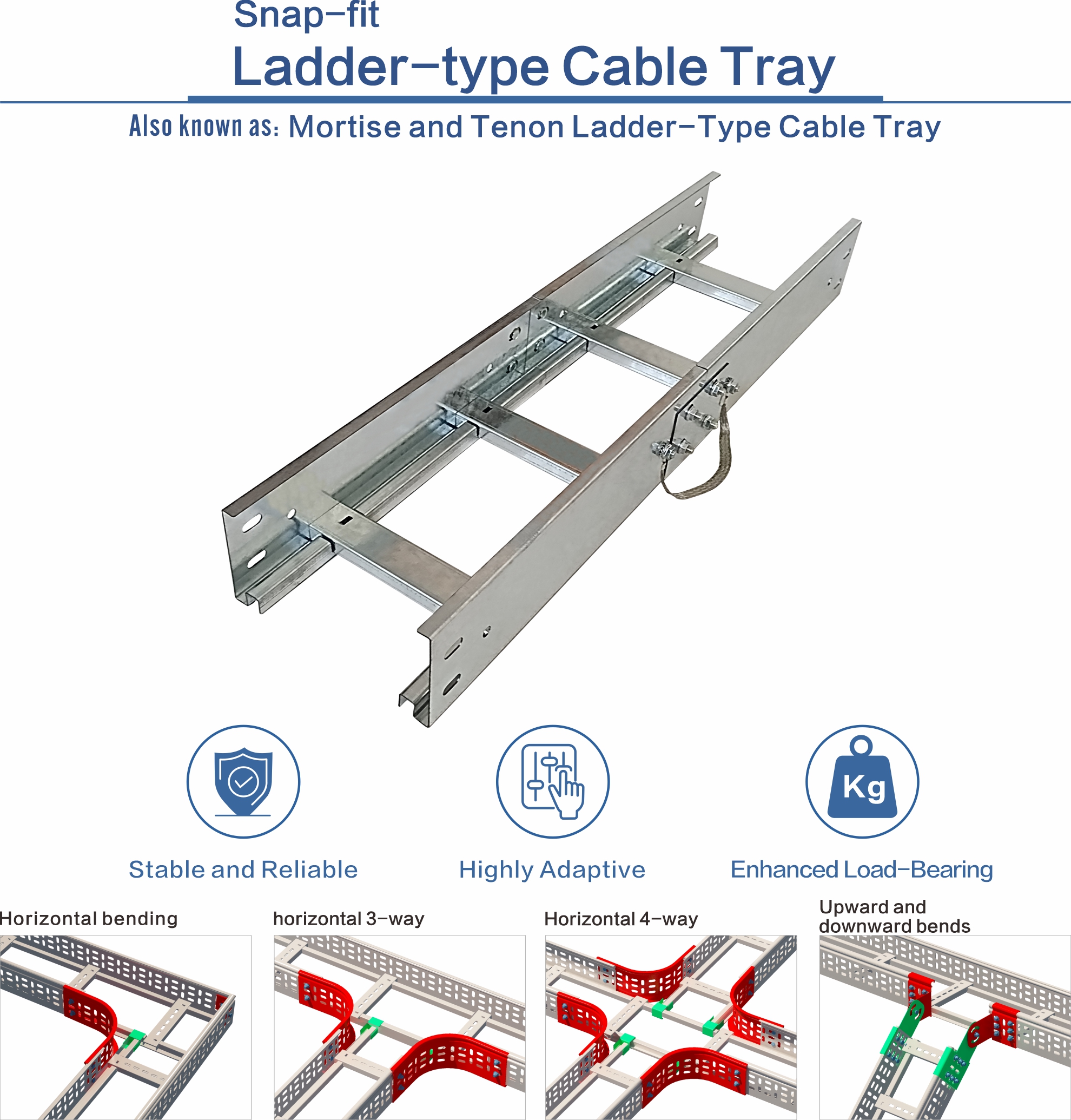
The Steel Ladder Cable Tray is a heavy-duty cable support system constructed from two parallel side rails connected by transverse rungs, forming a rigid "ladder" structure. It is the industry standard for supporting large-diameter power cables, busways, and conduit where maximum strength, long spans, and superior ventilation are required. Available in galvanized, stainless, or painted finishes, it provides a cost-effective and robust solution for industrial and commercial power distribution.
Key Features & Benefits:
High Strength & Load Capacity: The structural ladder design supports the heaviest cable loads over long spans, reducing the number of support points needed.
Maximum Ventilation: The open rung design allows for excellent airflow, preventing heat buildup and reducing cable derating issues.
Durability & Corrosion Resistance: Hot-dip galvanized steel provides superior protection against rust and corrosion in most industrial environments.
Easy Cable Access: The open top allows for easy installation, removal, and maintenance of cables at any point along the run.
Cost-Effective: Steel ladder tray offers the best balance of strength, durability, and cost for heavy-power applications.
Technical Specifications (Based on GB/T, ASTM, NEMA Standards):
|
Item |
Specification |
|---|---|
|
Material |
Q235 Carbon Steel, Stainless Steel (304, 316) |
|
Standard |
GB/T 11215, JB/T 10216, NEMA VE-1, ASTM A123 |
|
Common Width (W) |
100mm, 150mm, 200mm, 300mm, 400mm, 500mm, 600mm, 800mm, 1000mm |
|
Common Height (H) |
50mm, 75mm, 100mm, 150mm, 200mm |
|
Rung Spacing |
Standard: 225mm (NEMA) or 300mm (GB); Heavy-duty: 150mm |
|
Surface Finish |
Hot-Dip Galvanized (HDG), Pre-galvanized, Powder Coated, Stainless Steel |
Load & Span Reference:
Standard Span: Typically 1.5m, 2.0m, 2.4m (8ft), or 3.0m. Large-span trays can extend to 4m, 6m, or more with reinforced side rails.
Load Class: Rated per NEMA classes (e.g., 75, 100, 150, 200 lbs/ft) or GB/T load levels (Light, Medium, Heavy).
Typical Applications:
Industrial Plants: Main power distribution in factories, refineries, and manufacturing facilities.
Power Generation & Substations: Routing high-voltage cables and busbars.
Data Centers: Supporting heavy power feeders to server racks and PDUs.
Water Treatment Plants & Infrastructure: Exposed outdoor installations requiring corrosion resistance.
Mining & Heavy Industry: Where mechanical strength and impact resistance are critical.
Design Considerations:
Support Spacing: The span between supports is critical and must be calculated based on the total cable weight and tray load rating.
Grounding: Steel ladder trays must be properly bonded and grounded as part of the equipment grounding conductor system per NEC/GB codes.
Obstacle Clearance: Use Vertical Convex Bends to go over obstacles and Vertical Concave Bends to go under obstacles.